Growing Compassionate Learners Through the Compassionate Systems Framework

At Dulwich College (Singapore) our vision is to ‘Live Worldwise’ as global citizens and to develop these characteristics in our successful, happy and compassionate graduates. But how is this achieved, how is it made real in our classrooms and other spaces?
The Compassionate Systems Framework (CSF) is our approach to learning and to wellbeing support that integrates systems thinking with social-emotional learning. This framework, developed by the Centre of Systems Awareness at MIT, has allowed transformative action and change at Dulwich College (Singapore) over the last six years.
The journey of growing CSF has focused on several core skills that we believe are essential for the holistic development of students.
We want students to be able to:
- form strong relationships
- grow kindness
- understand different perspectives
- comprehend their own feelings and emotions
- be aware of others' feelings and emotions
- understand broader systems
Tangible Benefits
We believe the approaches, techniques and tools that are part of our framework when applied regularly have many benefits for students of all ages.
We would like to highlight five key benefits of the framework from the perspective of what our young people can do.
Relationships
Humans are typically social creatures, but the ability to establish and maintain strong relationships requires intentional teaching and practice. This involves:
- Regular check-ins to ensure ongoing communication and support
- Active listening to truly understand and empathise with others
- Through these practices, individuals learn to build and sustain healthy, supportive, and empathetic relationships.
Developing Social and Emotional Skills
Understanding broader human systems and becoming aware of others' feelings and emotions are critical components of emotional intelligence. These skills not only foster personal growth but also contribute to healthier, more empathetic communities and success in the adult world.
Growing and Sharing Kindness
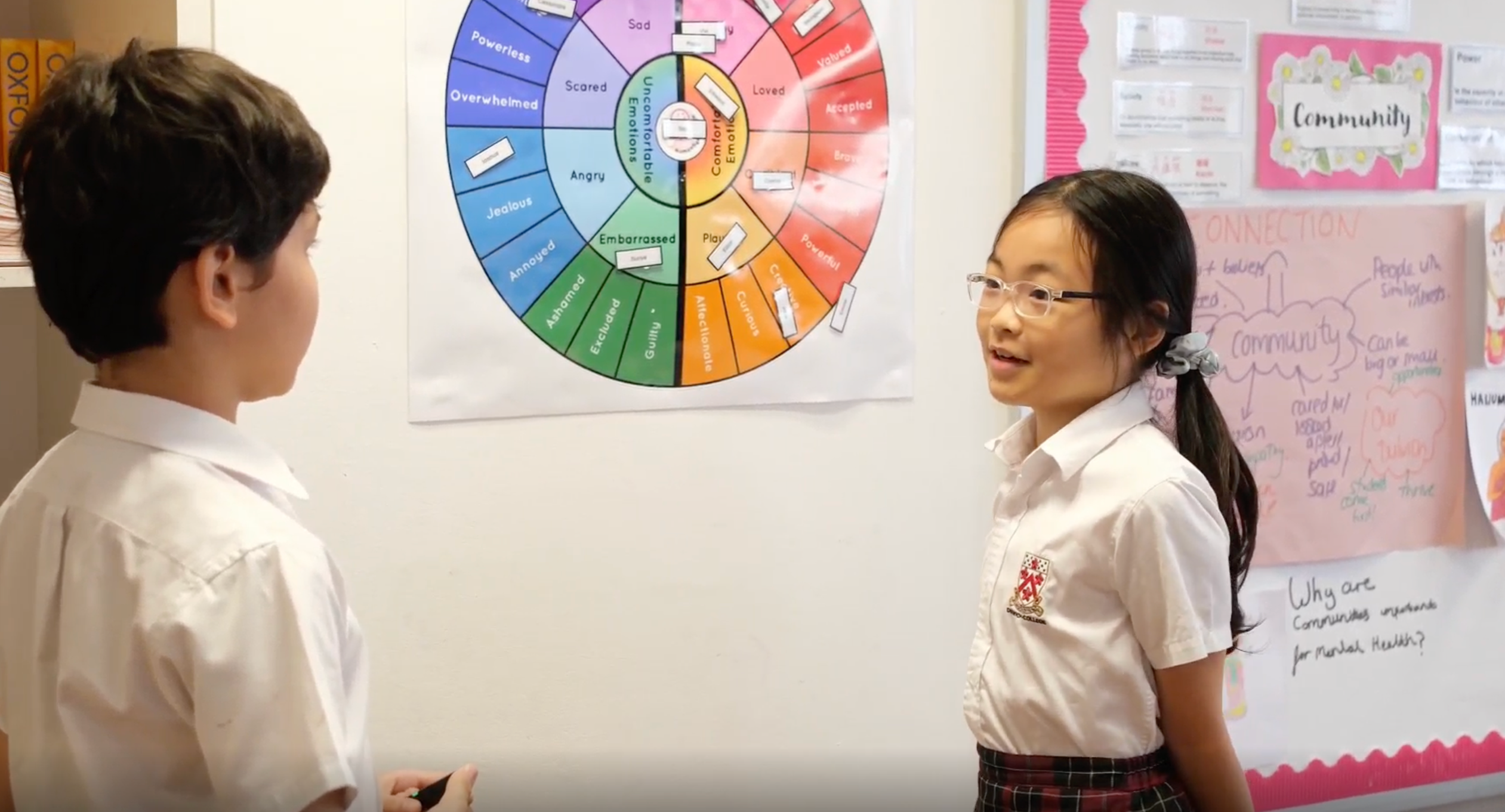
Promoting kindness creates a more positive world. The ripple effect of spreading kindness fosters a sense of purpose and is modelled by adults to become a part of the culture. Kindness should be explicitly taught to ensure its integration into everyday interactions. This is done through specifically taught wellbeing sessions but also woven into the fabric of day-to-day school culture. Year groups plan interactive lessons where the children look at examples of kindness around the world and how we can learn from this. It’s important to recognise how this can be applied to our context and that small actions make a huge impact, on both a micro and macro level. We also use systems thinking tools like the ladder of connectedness to explore the emotions of others and develop emotional literacy in students; of themselves and others.
Perspective Taking
Perspective taking is crucial in developing core social and emotional skills. It enhances empathy, allowing individuals to understand and share the feelings of others. This fundamental skill is essential for building strong, supportive relationships and fostering a compassionate community. To support with perspective taking, we often use a systems thinking tool called the Ladder of Inference to support this. The Ladder of Inference is split into seven sections and helps us to explore how human beings think, how they make meaning from situations. This is broken down into reflecting on key factual information and exploring what are our assumptions and beliefs are based on. It is often used by students when looking at a complex situation where multiple perspectives need to be considered.
Generative Social Fields
Generative social fields refer to the environments and contexts that naturally promote social and emotional learning. A basic understanding and explanation of these fields can help in creating spaces where positive social interactions and emotional growth are encouraged. We believe that positive fields where students can thrive can be grown through trust, empathy and collaboration amongst students, staff and parents. Encouraging open dialogue, fostering inclusivity, and modeling kindness creates a supportive atmosphere where academics, creativity and personal growth thrive, enhancing overall student well-being. The fields are developed with specific tools like mindful practice and the check-in which is a simple but specific way for children to connect with each other in conversation.
The Compassionate Systems Framework (CSF) is designed to help individuals and groups develop skills and knowledge to drive systems change. It focuses on personal mastery (SELF), reflective or generative interactions (EACH OTHER), and systems thinking (SYSTEM). The framework sees compassion as a teachable way of thinking. To cultivate compassion is to appreciate the systemic forces that influence people's feelings, thoughts, and actions. As the world becomes less predictable and potentially more challenging, we believe these skills will help our students be happy, healthy and successful in the future.