How Our Junior School Builds Future-Ready Learners

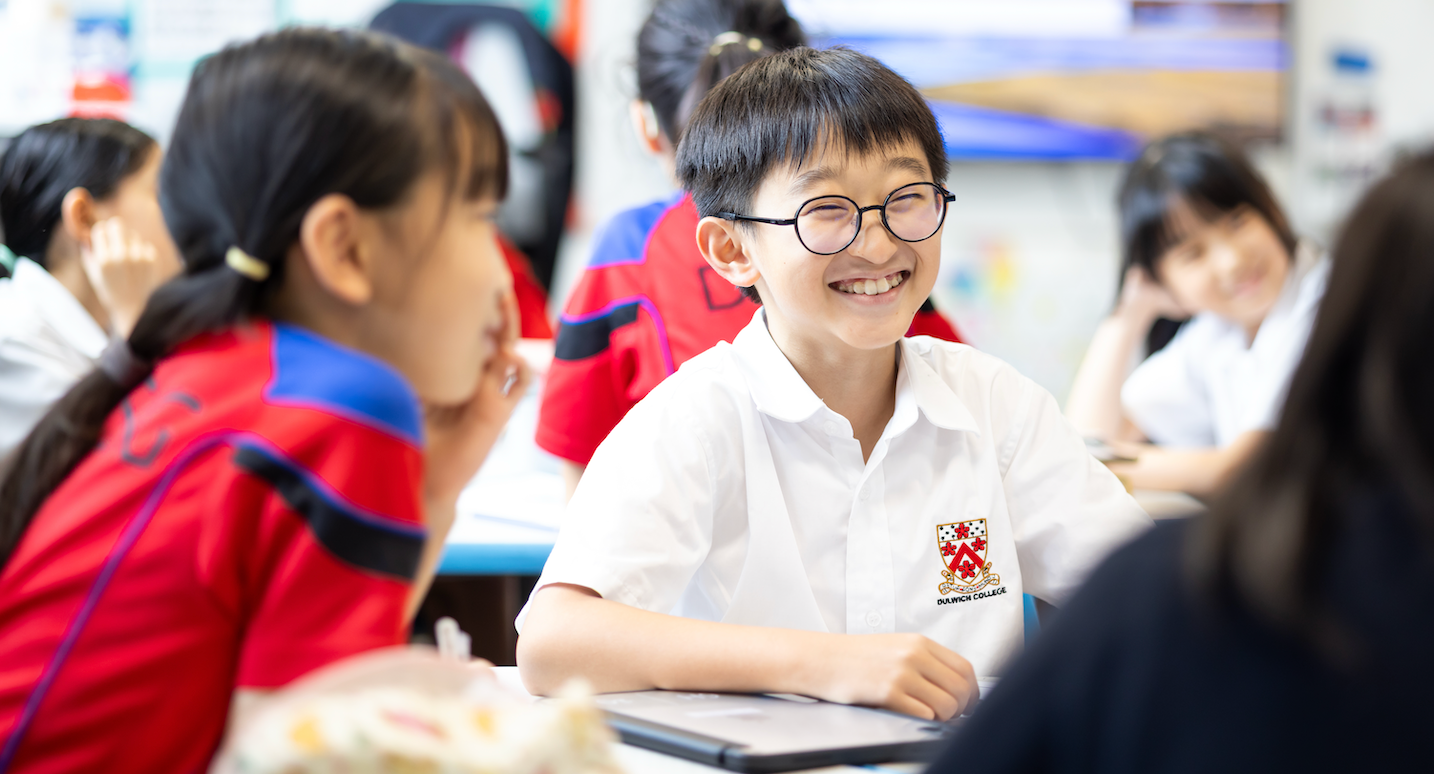
What does Junior School Learning look like and how does it help students thrive?
What does our College motto mean in terms of our Junior School curriculum? If the College is a bridge from childhood to higher education and the wider world, then the Junior School is the central arch of that bridge.
Developing the knowledge and skills needed to thrive as young adults starts at a young age. How does the Junior School curriculum prepare children for success in their journey ahead?
Numeracy and Literacy
Every child should leave the Junior School with a strong foundation in literacy and numeracy. Reading, writing and mathematics are important in their own right, but they also unlock every other subject that children study. RecentHarvard study identified reading as the single most important determinant of academic success.
We have daily, timetabled lessons in literacy and numeracy, and we make sure that children read and analyse both fiction and non-fiction beyond their English lessons.
Two important principles underpin our learning in these subjects. Firstly, that stand-alone skills such as spellings and calculation are important, but we expect and support children to use or apply these skills to create meaningful writing or solve increasingly complex problems.
Secondly, we understand that all children have different strengths and starting points. Rather than teach to the middle, our teachers find out where each child is in their learning and then support or challenge them from there.
Conceptual Understanding
A strong foundation of literacy and numeracy is a worthy and, in many settings, sufficient goal. However, we cannot teach every question in a Year 13 exam or prepare children to navigate every scenario they will face as adults.
Success at these times requires our young people to have an understanding of the big ideas and the relationships between them that are common across situations.
We refer to these as concepts, and our teachers have developed rich and exciting curriculum units that align with our Guiding Statements and foster conceptual understanding. For example, a Year 6 unit on sustainable farming explores the ideas of scarcity, cause, impact and solution. In Year 5, we task children with designing and choosing a city for the next Dulwich College, driving the concepts of innovation, location, structure and sustainability.
Skills for the Future
The curriculum is also a vehicle to develop essential human skills that technology can enhance but not replace. Children are taught to collaborate on projects and communicate their findings. There is a progression in public speaking. Critical thinking is taught through debate; for example, children explore the dangers and the benefits of plastic. Understanding how ideas and people are connected is a key skill for future problem solvers. Children explore Systems-Thinking using visible learning tools from the MIT Compassionate Systems Framework.
Innovative Learning Spaces
Our campus is beautiful, and we are very proud of it. But look more deeply, and we see that spaces are designed to inspire learning and thinking. Our classrooms are bright, interactive and supported with technology that helps personalise learning. We have fully operational science labs and performance studios. Our design and art spaces are organised to develop an understanding of the design cycle: research, ideate, prototype, evaluate and improve. Our spaces go beyond teaching science or creating a nice piece of visual art; they develop scientists, designers and artists.
The library at the heart
Our library is at the heart of our curriculum. It plays a crucial role in developing a love of reading, with our children able to browse shelves of over 15,000 titles, including fiction and non-fiction, in a range of languages.
Children also have access to a myriad of online titles and resources. Beyond book borrowing, the library plays a crucial role in developing a learn-to-learn capability in our children.
Children receive direct instruction from our teacher librarian on researching effectively and ethically. This includes navigating the rapidly changing information landscape around AI. We are both excited and careful about the future and set out under the principle that technology should allow children to think more deeply, rather than less.
A Love of Learning
Above all, we want children to leave the Junior School with a love of learning. Children should enter our Senior School with curiosity and an enjoyment of the hard work that results in a problem solved or a moving piece of writing.
We build opportunities for children's choice and agency into our curriculum. Most importantly, it is the dedication of our talented teachers to create engaging lessons and units of work that inspire and equip our young learners for the next arch of their bridge to the world.