Nurturing Multilingual Minds Through the First Language Programme
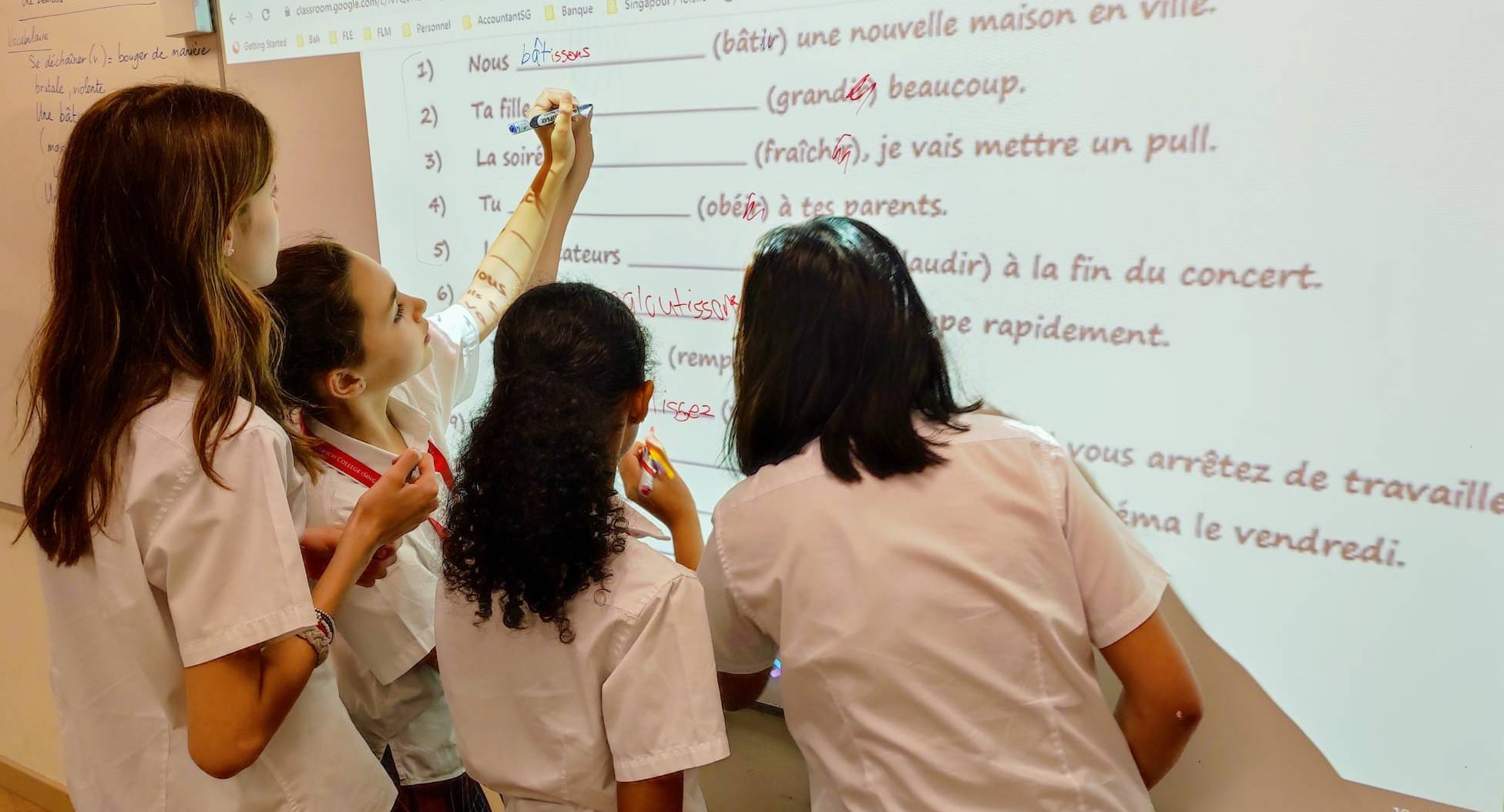
Launched in 2021 with just 29 students, the First Language Programme at the Senior School has become a cornerstone of the school’s multilingual identity, now serving 67 students across Years 7 to 13. Designed to celebrate linguistic diversity and cultural identity, the programme allows students to maintain and deepen their proficiency in their mother tongue while thriving in an English-medium environment.
From Years 7 to 11, First Language French and Japanese are fully embedded in the timetable and delivered by external language course providers who come to campus to teach. These highly qualified tutors bring both linguistic expertise and authentic cultural perspectives, providing structured, continuous progression in language and literature. The First Language pathway, a paid programme, enables students to gradually develop critical thinking, cultural awareness, and academic literacy in their home language — skills that naturally enhance performance across other subjects studied in English. This rigorous and well-supported progression prepares students effectively for independent language study at the IB level.
At the IB Diploma Programme (DP), students can study their mother tongue as Language A, supported by a network of experienced tutors. Recent cohorts have included students studying Japanese, French, Spanish, Korean, and German as their IB Language A subjects, all successfully achieving IB bilingual diplomas. The bilingual diploma is highly regarded by universities worldwide as a marker of academic excellence and intercultural competence, demonstrating students’ ability to think, write, and analyse critically in at least two languages — an increasingly valuable skill in a globalised world.
Research consistently shows that strong proficiency in one’s first language enhances overall literacy, cognitive flexibility, and academic achievement. It also strengthens cultural identity, helping students connect with their heritage while thriving in international contexts.
Now in its fourth year, the programme is gaining recognition both within and beyond the school community for its academic strength, personalised design, and cultural significance. Its continued expansion highlights the school’s commitment to valuing languages as bridges between cultures and as keys to lifelong learning. By sustaining and celebrating their first languages, students not only preserve an essential part of who they are but also build the skills and confidence to succeed as Worldwise citizens.